



Types of Surfboards Explained: Which Shape Suits Your Surfing?
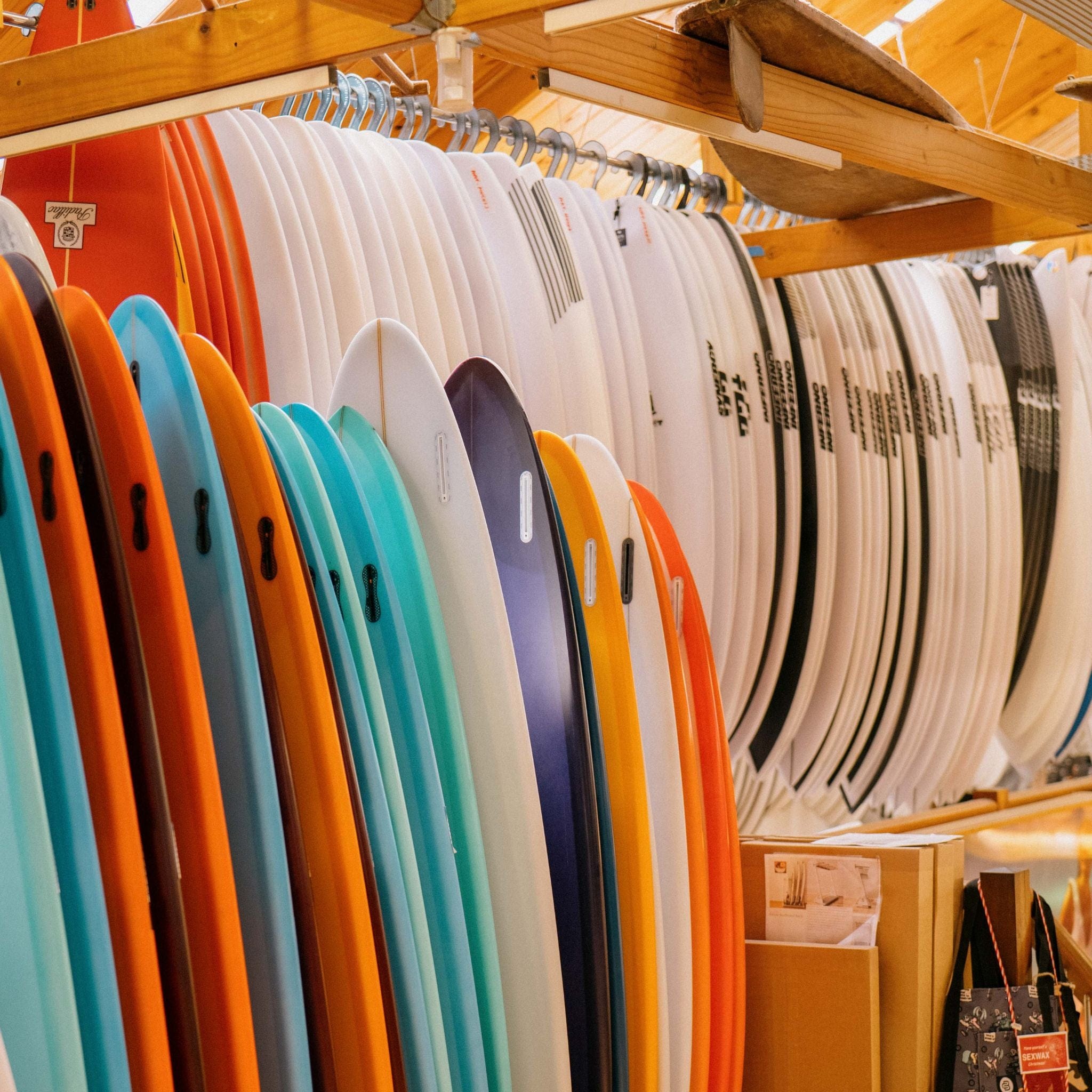
Walk into any surf shop and the rack can look like a wall of white foam and fancy names. But strip it back and every surfboard comes down to four things:
-
Length
-
Width
-
Thickness
-
Outline
These four things decide how easily a board paddles, how quickly it catches waves and how sharply it turns. Subsequently, they also decide how much fun you have.
So what type of surfboards are there and which shape belongs under your arm? That’s the question.
We'll run through every shape you're likely to come across, in plain terms, so you can tell them apart and land on the one that suits the waves you actually surf.
Have a browse through our full surfboard range after you check it out.
What Makes One Surfboard Shape Different to Another?
It helps to know which parts of a board do the work.
Length and volume are the big ones. More of both means more paddle power and more stability, so the board catches waves earlier and sits steadier under your feet.
Outline, rocker and tail shape are more nuanced. A curvier outline and more rocker (that's the nose-to-tail curve) let a board turn tighter and fit into steeper faces.
As with all things though, there’s a tradeoff. The easier a board is to catch waves on, the less sharply it turns. Every shape below is just a variation on that fact.
One more thing. Construction (soft top, epoxy or PU) is a separate decision to shape. But we'll park that for now.
The Main Surfboard Shapes and Who They Suit
Here are the shapes you'll meet most often, what each does well and who should be riding it.
Soft Top Surfboards
A soft top is exactly what it sounds like. A board with a foam deck and soft, forgiving rails.
It's the most stable and safest shape in the water, which is why nearly everyone starts here. All that volume means you paddle into waves easily and stay on your feet longer. It also doesn’t do much damage, if any at all, if it bumps into you post-wipeout.
Best for first-timers, groms and cruisy summer beachies. Plenty of seasoned surfers keep one in the quiver for small, playful days too.
Longboards
A longboard is nine feet or over and usually has a single fin or a 2+1 setup.
Length is the deciding factor here. Ample paddle power and glide mean you catch waves early and float through the flat sections that would stop a shortboarder in their tracks.
Longboards turn in long, drawn-out arcs rather than sharp snaps. Think about the difference between a cruise ship and a speedboat. If you'd rather walk to the nose and trim than throw buckets of spray, this is your board.
Suits small, soft waves and anyone chasing that classic, cruisy feel.
Mid-Lengths
A mid-length sits right in the middle… roughly 6'6 to 8'0.
Think a longboard's glide with a touch more of a shortboard's bite. It's a brilliant one-board option across a huge range of conditions, which is exactly why it’s one of the most popular shapes in the world.
Have a gander at our guide to the best mid-lengths for the full rundown.
Fish
What’s a fish surfboard? Short, wide and flat with a swallow tail cut into the back.
That extra width and flatness make it fast off the mark, so it flies in small, gutless surf that a shortboard would sink in. It's loose and fun without asking much of you.
Suits intermediates who want speed and a bit of looseness but aren't ready to drop to a shortboard's low volume. Our fish and retro fish shapes both scratch that itch.
Hybrids and Grovelers
A couple of other styles… for the surfboard nerd who wants to know everything.
-
A hybrid takes a shortboard outline and adds width and volume, so you get performance-style turns without needing great waves
-
A groveler is the small-wave specialist in the same family. Built to make average, mushy days actually fun
Both are the sensible second board for someone stepping off a funboard or soft top who still wants everyday, average surf covered.
Shortboards
A shortboard is narrow, low-volume and full of rocker. It's the performance shape, built for steep, clean, powerful waves and hard, vertical surfing.
We'll be straight with you though. It's the hardest shape to paddle and catch waves on. Most def the wrong first board for almost everyone. Foam is your friend when you're learning... and a shortboard has very little of it.
Suits confident surfers with good waves and the fitness to match. When you're ready for it, our performance range is where to look.
Step Ups
So what is a step-up surfboard? It's a longer, narrower version of your everyday shortboard, built for bigger, faster waves.
The rule of thumb is simple. Take your regular board and add a few inches of length. You want something “knifey”... something with hold in steep waves that’ll keep you glued to the face.
It's not a board you reach for often, but when the swell pumps, you'll be glad there's a step up within arm’s length.
Other Boards You Will Hear About
A couple of shapes come up in conversation that most surfers never actually start on.
The gun is a long, narrow, pointed board made for genuine big-wave surf. It's built for paddle speed and holding a clean line at high speed. Not something you'll need at your local beachie.
And what’s a hydrofoil surfboard? It's a board with a mast and wing fixed underneath that lifts the whole thing clear of the water as you pick up speed. Once it's up, you glide above the surface with almost no drag, riding swell that a normal board couldn't touch. It's pretty much a different sport, with a steep learning curve, but seriously addictive once it clicks.
Which Surfboard Shape Should You Ride?
Short version: by ability and the waves in front of you.
-
Learning: A soft top, every time
-
Small and soft waves: A longboard or a mid-length for the glide
-
Everyday, average surf: A fish or a hybrid
-
Steep and clean: A shortboard
-
Bigger, faster waves: A step up
Sizing is its own question, so we've left it out here. For that, work through our how to choose the right surfboard guide and what size surfboard should you buy next.
Frequently Asked Questions
Q. What is the easiest surfboard to learn on?
A soft top, hands down. The foam deck, extra volume and forgiving rails make catching waves easy and wipeouts painless.
Q. What is a hybrid surfboard?
A shortboard outline with extra width and volume added, so you get performance-style turns in everyday, average waves rather than needing them perfect.
Q. What is the difference between a fish and a shortboard?
A fish is wider, flatter and faster in small, weak surf. A shortboard is narrower with more rocker, built for steep, powerful waves and harder turning.
Q. Can a beginner ride a shortboard?
You can, but you'll struggle. Low volume makes it hard to paddle and catch waves, so most surfers are far better off starting on foam and stepping down over time.
Final Thoughts
Shape is what sets a board apart. It decides, well, pretty much everything. The right surfboard for you is simply the shape that matches the waves you actually surf, not the one your favourite pro rides.
Still weighing it up? Browse the full surfboard range online or drop into the Gezza shop and the team will happily talk it through. We've been matching surfers to the right board since the 70s and there's not much we enjoy more (except surfing them ourselves).