




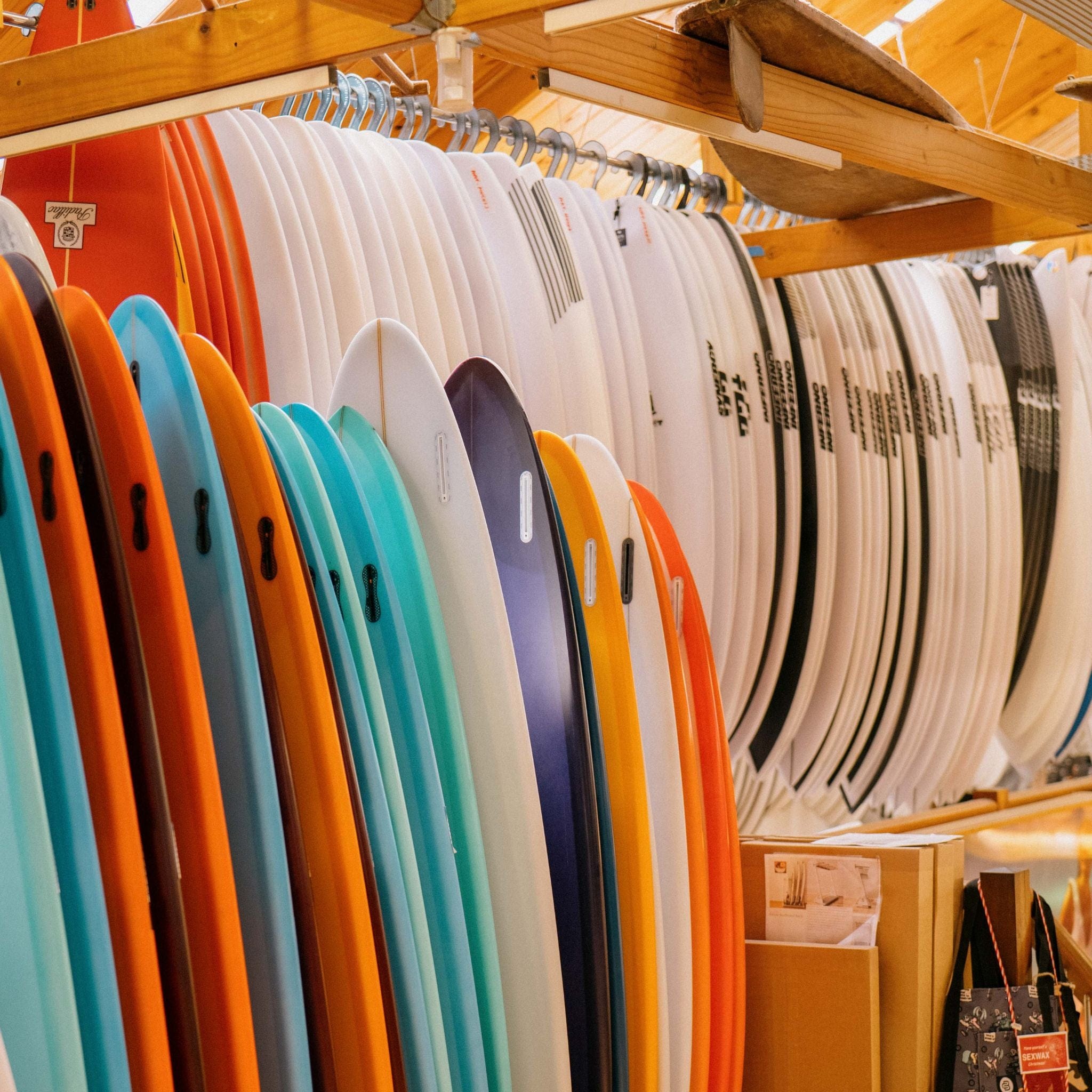
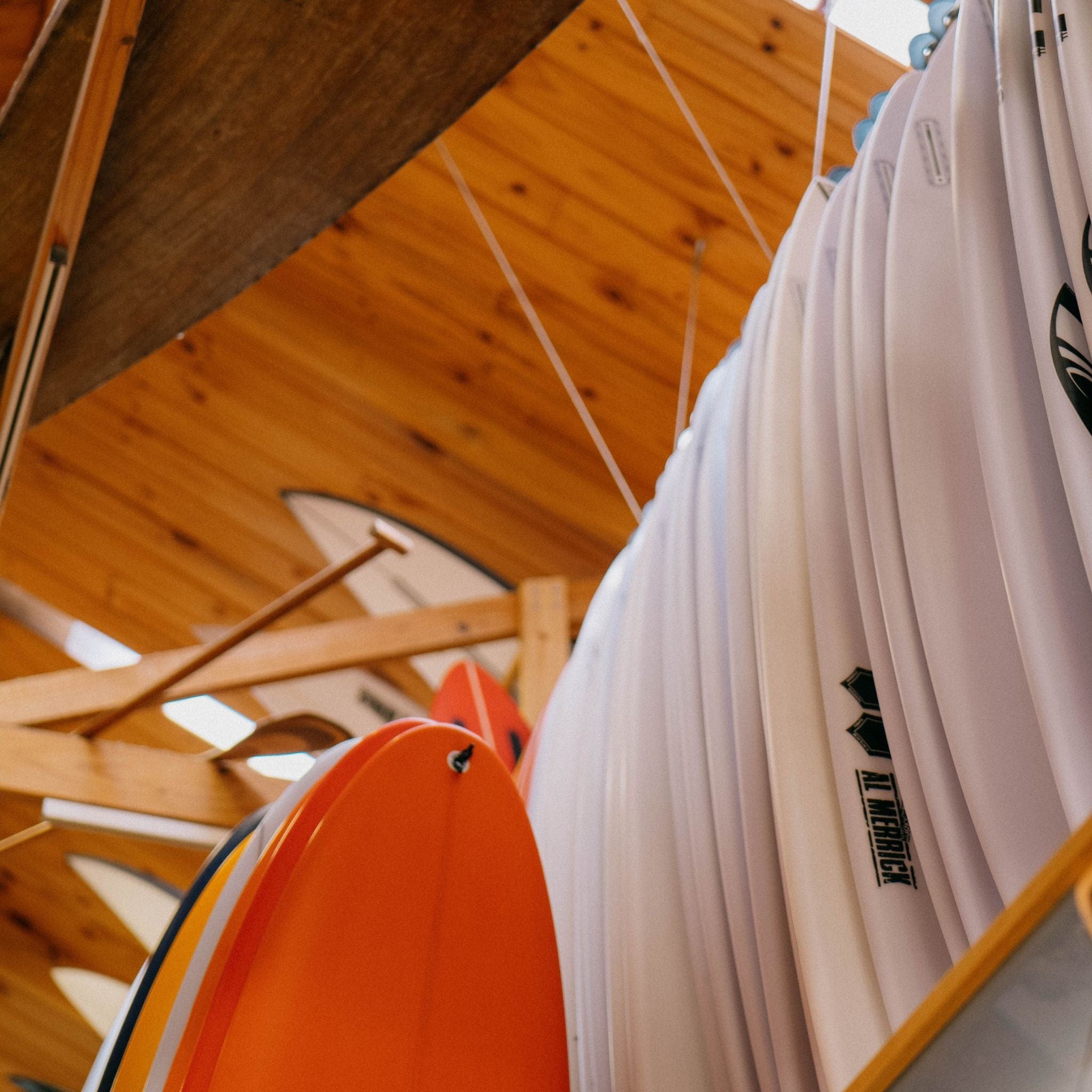
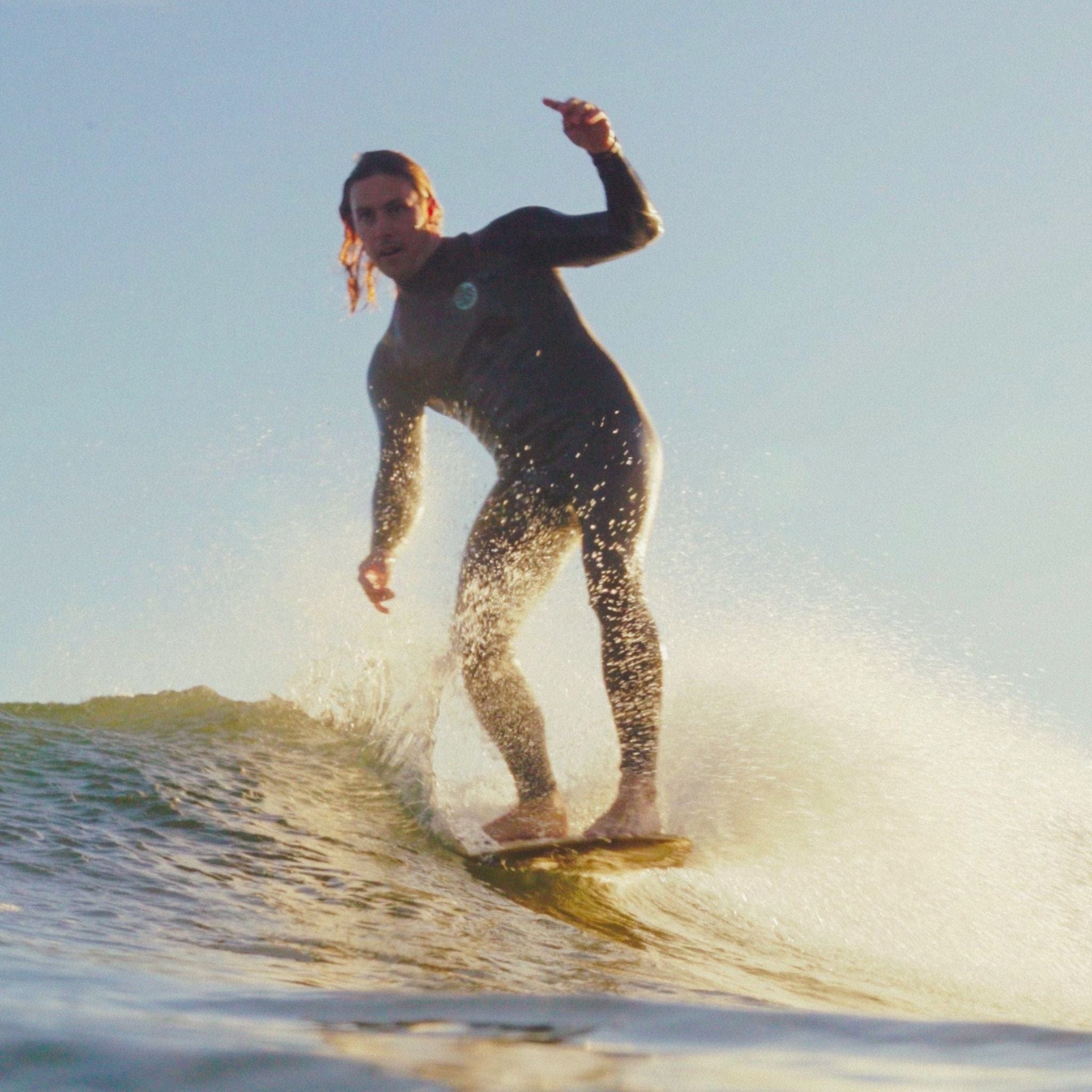




Not sure what surfboard you should get? It’s actually a great problem to have.
Aesthetics aside, there’s a sense of excitement and possibility that comes with buying a surfboard. And the anticipation of baptising your new fibreglass beauty is a legit joy.
But there’s more to choosing a surfboard than selecting based on looks alone. The right board comes down to four things.
Your skill level, the waves you actually surf, the shape of the board and getting the size right.
Nail those in that order and you'll walk away with a board that makes you love your surfing more than you could ever imagine. Choose wrong and you’ll be cursing the board, yourself and possibly even our crew (god forbid!).
The truth is that working out what surfboard is right for you can be overwhelming when there are dozens of shapes, volumes and sizes staring back at you. So we've kept this simple.
This is a plain-English guide on how to choose a surfboard, walking through each factor one at a time, so by the end you can confidently shortlist the board that suits you.
Want to see what's available while you read? Have a gander at our full surfboard range before you scroll.
Start with your surfing ability
An honest look at your own ability is the single biggest driver of board choice.
Not the level you're aiming for. Not even the level when you’re surfing your best. Where you're actually at right now. And here's the trap almost everyone falls into: buying too small too soon.
It's tempting to grab the board your favourite pro rides or the sleek little shortboard your mate swears by. But a board that's too small for you is the highest form of surf-related self-sabotage.
Be honest with yourself and the right choice gets a lot clearer.
Beginner
Volume is your friend. Higher volume, wider and more stable boards make catching waves and standing up far easier, because they float you better and are easier to balance on.
-
Our advice for a first board is simple: go with a soft-top
-
They're the safest and most forgiving boards out there
-
Soft-tops are easy on you and everyone around you
-
They'll have you catching more waves (and building fast confidence) from day one
Take a look at our soft-top range to see what we mean.
Intermediate
Once you're consistently catching waves and linking a few turns, you're ready to move onto a hard board.
-
Mid-lengths, hybrids and user-friendly shortboards are the sweet spot here
-
They still paddle well and catch waves easily, but they turn a lot more than a beginner board
-
This way you can start developing your surfing without giving up the fun and the wave count
Advanced
Got your technique down pat and surfing with control and consistency? Welcome to the world of lower volume, Ferrari-esque performance boards.
-
Shortboards and advanced fish shapes reward good surfing with speed and manoeuvrability
-
With these boards you can surf tighter in the pocket
-
You can also surf a more “skatey” style and throw the board around
-
These shapes ask a lot of you, but in the right hands they’re a legit thrill
Match the board to your local waves
Once you know your level, the next step in how to pick the right surfboard is looking at where you surf.
The waves you surf most often should shape your decision. There’s zero logic in buying a surfboard suited to cupped-out Indonesian waves if you surf mushy knee-slappers 90% of the year.
We know all too well that it's easy to buy for the dream. But the board that serves you best is the one that suits your home break week in and week out. In a nutshell:
-
Small or weak waves favour more volume and width, which help you paddle and keep your speed through the fatter sections
-
Punchy or hollow waves suit lower volume and more curve so the board fits into steeper faces and holds a line
-
Longer but soft waves are better suited to boards with a long rail line and ample volume, like mid-lengths and longboards
The main surfboard shapes and who they suit
Matching the shape to your surfing is where most people land on what surfboard to buy. Every shape trades off three things: stability, paddle power and manoeuvrability.
More of one usually means less of another. And knowing where each board sits helps you match the shape to your surfing.
There’s a certain personality aspect to choosing your surfboard shape too. Without generalising too much, our team find that people seeking a cruisy, easy surfing experience opt for longer and bigger boards. On the flipside, people chasing tubes and a more thrilling surfing experience will need a shape that matches their vibe.
Here's a quick rundown.
Soft-top
The most stable and forgiving option going around. Soft-tops are ideal for beginners finding their feet. They're also a heap of fun in small, playful waves no matter your level. Browse our soft-tops here.
Longboard
Easy paddling, easy wave-catching and that classic, timeless glide. Longboards suit small waves and all abilities… from first-timers to seasoned loggers cross-stepping their way to the nose. See our longboard range.
Mid-length
The versatile middle ground. A mid-length gives you the paddle power and wave-catching of a longer board with more manoeuvrability, so it's a great all-rounder if you want one board that does a bit of everything. Have a look at our mid-lengths.
Fish
Fast and loose and heaps of fun in small to average waves. A fish is wider, flatter and higher in volume than a shortboard, so it keeps its speed when the surf is gutless but still lets you surf with a bit of zip. Check out our fish range.
Shortboard and hybrid
High-performance shapes built for steeper, better waves. They reward good technique with speed and control. Hybrids are the everyday version, adding a touch more volume so you can ride a performance shape in the average conditions most of us surf day to day. Explore our hybrid range.
Get the size and volume right
Once you've settled on a shape, size and volume are the final piece of the puzzle.
This is where you factor in your height, weight and fitness to land on the exact dimensions that'll feel right underfoot.
We won't rehash the full sizing method here, because we've already got dedicated guides that cover it properly. Work through what size surfboard you should buy and how to calculate the volume of a surfboard and you'll have the numbers to dial in your shortlist.
Frequently asked questions
Q. What surfboard should I get as a beginner?
Start with a soft-top. Higher volume and width make catching waves and standing up much easier, and a soft-top is the safest, most forgiving option while you find your feet. From there you can step down as your surfing improves.
Q. How do I know which surfboard is right for me?
Work through it in order: your ability first, then the waves you surf most often, then the shape that suits both, and finally the size and volume for your body. That sequence is the quickest way to find the right surfboard without buying too small too soon.
Q. What surfboard should I buy if I only surf small waves?
Lean towards more volume and width. Soft-tops, longboards, mid-lengths and fish all keep their speed in smaller, weaker surf, so you catch more waves and have more fun. Save the low-volume shortboard for when the waves have some size and punch.
Final thoughts
Choosing the right surfboard isn't complicated once you take it in order: start with your ability, then the waves you surf, then the shape that suits both and finally the size and volume to match your body. Get those four right and you'll have a board that genuinely lifts your surfing.
If you'd like a hand narrowing it down, browse our full surfboard range or get in touch with the team in Gerringong. We've been fitting people to the right board for over 50 years and we'd love to help you find yours!